
Reskilling has become one of the defining priorities for L&D as organisations respond to AI-driven changes in work. New technologies are changing roles, workflows and the skills people need to perform effectively, and learning teams are being asked to help their organisations keep pace. The response is understandable: identify emerging capability needs, create learning opportunities and help people adapt. But as the pace of change accelerates, there is another question L&D leaders may need to consider: what happens when the need to continually reskill becomes a source of strain in itself?
A recent perspective published in Frontiers in Artificial Intelligence introduces the idea of “reskilling fatigue”, exploring what can happen when professionals are repeatedly required to develop new skills while the knowledge and expertise they have already built are being disrupted or displaced by changing technology. The concept is particularly relevant for experienced knowledge professionals whose value comes not only from what they know, but from the judgment and expertise they have developed over years of doing the work. When the environment around that expertise keeps changing, the challenge may not simply be whether people are willing to learn. It may be whether they are being given enough opportunity to turn learning into lasting capability.
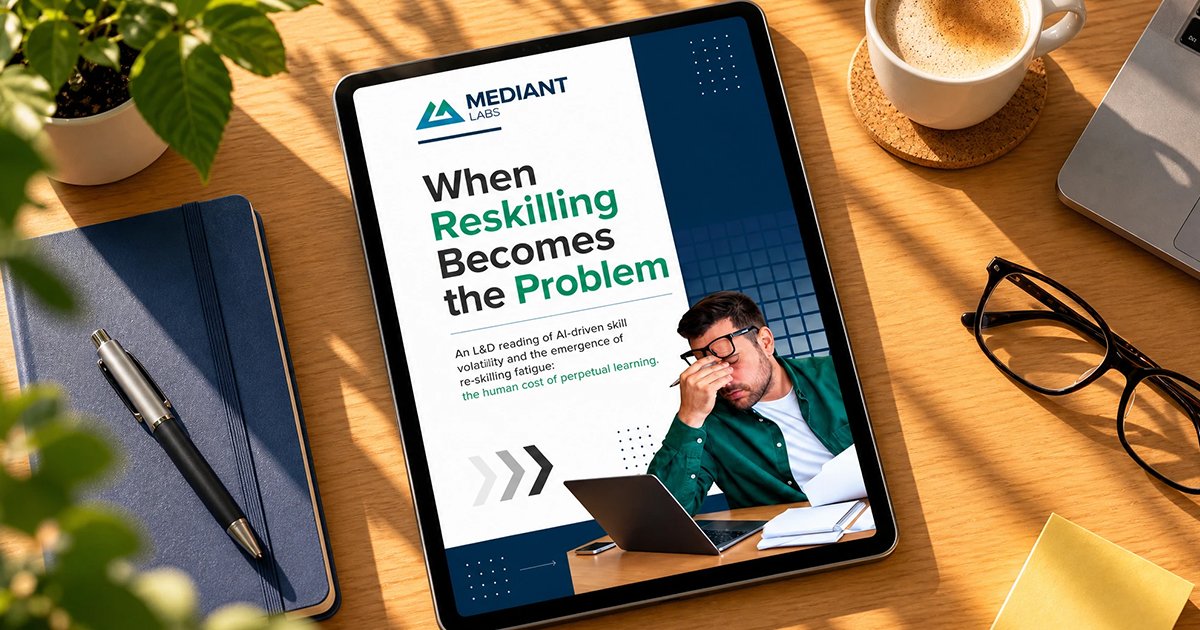
This is the idea we explore in more detail in our L&D reading, When Reskilling Becomes the Problem.
When more learning isn’t necessarily the answer
For years, reskilling has largely been framed as a positive response to disruption. If the nature of work changes, people need new skills; if technology changes, people need to learn how to use it. But the relationship between change and learning is not always that straightforward. Every new technology, process or role expectation can create another learning requirement, and when these changes begin to arrive in rapid succession, the cumulative demand on employees can be easy to overlook.
This raises an important distinction for L&D. Learning can be a resource that helps people navigate change, but it can also become another demand placed on people who are already adapting to changing expectations in their day-to-day work. When learning is continually added on top of the job, without sufficient time to practise and apply what has been learned, organisations may need to think differently about what successful reskilling actually looks like.
Our reading takes a closer look at this tension and the emerging concept of reskilling fatigue, including why it may be different from the learning fatigue, burnout or technology-related stress that organisations typically recognise.
The question behind the learning strategy
This is not an argument against reskilling. Far from it. As AI continues to change how work gets done, organisations will need people who can develop new capabilities and apply them effectively. The more interesting question is how organisations create the conditions in which that learning can actually translate into expertise.
That may require L&D to look beyond the learning programme itself and consider the wider environment in which learning takes place.
Questions for L&D leaders
- How quickly is the organisation changing?
- How frequently are new technologies and workflows being introduced?
- Do people have the time and opportunity to apply what they have learned?
- Is L&D involved early enough in conversations about how work is changing, or is the function primarily brought in once a new capability requirement has already been established?
These questions become increasingly important as AI moves from experimentation into everyday work. The challenge for L&D may no longer be simply helping people acquire the next set of skills. It may also be helping organisations determine how much change people can realistically absorb, and how to build capability that lasts rather than constantly replacing what came before.
A different way to think about reskilling
The research behind this discussion is conceptual rather than empirical, and it does not provide a definitive formula for how much reskilling an organisation should undertake. Its value is in raising a question that is easy to miss when the pressure to keep up with AI is high: Can the very activity intended to build capability sometimes contribute to the problem it is intended to solve?
For L&D leaders, that is worth pausing over.
Because the goal of reskilling is not simply to keep people learning. It is to help people become capable of doing something differently, confidently and effectively. If the cycle of change becomes so rapid that people are continually preparing for the next shift without having the opportunity to consolidate the last one, the organisation may need to rethink not just what it teaches, but the pace and conditions in which learning happens.
Download When Reskilling Becomes the Problem for a closer look at the research, the idea of reskilling fatigue and what this emerging conversation could mean for L&D and capability strategy.